
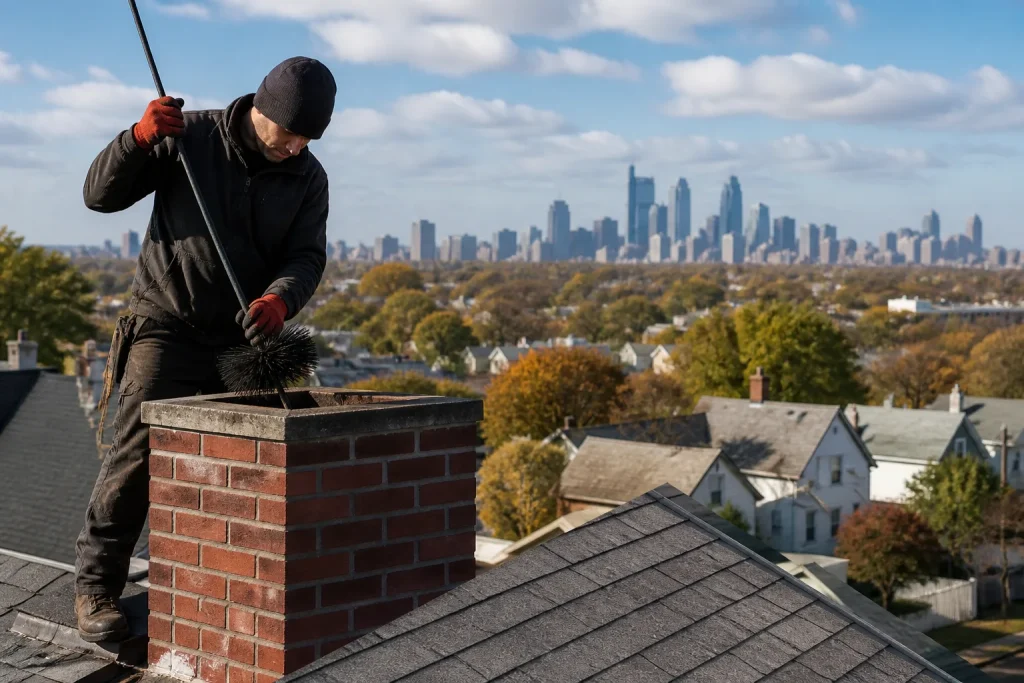

Gelco Chimney Sweep in Northeast Philadelphia: A Homeowner’s Guide
Homeowners don’t usually think about what brand of cement holds a chimney liner together, until they need to reline five years after a repair that should have lasted twenty. Gelco is one of those names you spot on a contractor’s material list and skip right past. It’s a professional-grade supply brand, not something sold to homeowners at a hardware store, and what it does in your chimney system matters more than the label suggests. If you’re comparing estimates in Northeast Philadelphia and want to know why the materials behind a quote differ, this guide is for you.
If you’d rather have someone walk your system with you, call (855) 658-4023. We answer 24/7. Fast dispatch from 7am to 7pm, Sunday through Friday.
What Does Gelco Actually Make, and Where Does It Go in Your Chimney?
Gelco manufactures the mortars, sealants, and refractory materials that hold a chimney system together. You won’t see most of it once the job is done, which is exactly why it’s easy to ignore. Its products show up in a few specific places:
- Crown and wash sealants. The crown is the concrete cap at the top of the chimney that sheds water away from the masonry. A crown sealant has to flex with freeze-thaw movement without cracking open.
- Refractory mortar for fireboxes and smoke chambers. The firebox and the smoke chamber above it take direct heat. Refractory mortars are built to handle that, where a general-purpose mortar breaks down.
- Masonry repair cements. Used for repointing joints, patching spalled brick, and setting new flue tile.
- Liner resurfacing compounds. These work alongside HeatShield for resurfacing deteriorating clay tile liners when the tile is still sound enough to coat rather than replace.
In Northeast Philadelphia, that last category matters. The housing stock here includes a lot of brick chimneys built decades ago, and clay tile liners from that era are prone to cracking at the joints after enough winters. The right product for that flue isn’t always a full stainless liner; sometimes it’s a resurfacing application, and sometimes it’s a flexible stainless system.
Why Trade-Grade Sealants Outperform the Box-Store Alternative
Trade-grade sealants and cements last longer because they’re formulated for the thermal cycling a chimney actually goes through. A chimney heats up when there’s a fire and cools down when there isn’t. Do that a few hundred times a year and the materials holding the masonry together take a beating. Box-store mortar is made for general masonry, not for a surface that swings between hot and cold on a regular basis.
We’ve seen this play out in Northeast Philadelphia. A crown patched with the wrong sealant will typically show hairline cracks within a couple of seasons, and those cracks let water in, which then freezes, expands, and pushes more masonry loose. That’s the freeze-thaw loop. Materials that flex with the movement break the cycle. Materials that don’t, don’t.
The other piece is the liner itself. Trade-grade products like DuraFlex flexible stainless liner systems and Olympia Chimney components are engineered as part of a UL-listed system. The liner, the insulation, the top plate, and the appliance connector are tested together. When a contractor buys off-the-shelf components and improvises the assembly, you get something that may work, but it isn’t a tested system, and that distinction comes back up at inspection and insurance time.
What Northeast Philadelphia Chimney Conditions Make Material Choice So Important
Northeast Philadelphia’s freeze-thaw cycles are the biggest stressor on a chimney. Water gets into masonry, freezes overnight, expands, and then thaws. Do that over a winter and even a sound chimney starts to show wear at the crown, at the mortar joints, and at the top of the flue. Older row homes and twins throughout the area often have chimneys that were built with materials that met the standard for their time but weren’t engineered for the number of cycles we get now.
What that means for material selection:
- Crowns need flexibility. A rigid crown that can’t move with the freeze-thaw cycle will crack and let water in.
- Mortar joints need to be repointed with a mix matched to the brick. Too hard a mortar and the brick spalls instead of the joint.
- Liners need to tolerate temperature swings without opening at the joints. That’s where a flexible stainless system or a resurfacing application earns its keep.
- Fireboxes need refractory mortar. Not the same mix used on the exterior masonry.
If you want to understand what a failing crown looks like, our chimney cap & crown page walks through the warning signs.
Questions to Ask a Contractor About Liner and Repair Materials
Before you sign an estimate in Northeast Philadelphia, ask what materials the job calls for and why. A contractor who knows their products will answer easily. A contractor who just grabs whatever is on the shelf won’t. Here’s what we’d want to know if it were our own chimney:
- What brand of sealant or mortar are you using on the crown, firebox, or joints, and why that one?
- Are the liner components UL-listed as a complete system? The test applies to the assembly, not just the pipe.
- Is the liner insulated, and does the insulation come from the same manufacturer as the liner?
- Will you show me photos of what you find before and after the work?
- Is the fireplace firebox included in the scope, or is that subcontracted out?
- What does the written estimate cover, and what isn’t included?
If a repair is being recommended, ask for camera evidence you can see. It’s one thing to hear that a liner is failing; it’s another to watch it on a screen. A written estimate should set the final price, and it should be based on what the camera found, not what a salesperson guessed. If the work can safely wait until next season, a contractor should say so.
How Gelco Products Relate to UL-Listed Liner Systems (and Why That Matters)
Gelco makes the materials that surround and support a liner; it doesn’t make the liner itself. That distinction matters when you’re talking to an inspector, an insurer, or a buyer’s home inspector during a sale. The liner is a DuraFlex or Olympia Chimney product, tested to a UL standard as a complete system. The Gelco products are the sealants, mortars, and refractory materials that keep the surrounding masonry and the firebox holding together around that liner.
When you sell a house in Northeast Philadelphia, a home inspector will look at the chimney. If the liner isn’t UL-listed as a system, or if the crown and firebox show the wrong kind of repair, that shows up in the report. Fixing it under pressure before closing costs more than doing it on your own schedule.
We work with professional-tier chimney brands because the whole system has to hold as a system. That includes DuraFlex for flexible stainless retrofits, HeatShield for liner resurfacing, and Gelco for the masonry and refractory side. When you need a broader repair, our chimney repair page explains what’s covered.
When to Call a Pro
Some chimney work isn’t a homeowner job, and we’d rather say so plainly. High-tension chimney components, gas lines, and any work that involves climbing to the top of a chimney are not projects to take on without training. Electrical, gas, and structural issues are the same story. Call a trained professional for those. What a homeowner can safely do is schedule an inspection before the burning season, watch the camera feed, and ask questions about what the technician finds. Our Chimney Sweep Northeast Philadelphia page explains what an inspection covers.
Related services in Northeast Philadelphia: a chimney sweep for routine cleaning, cap and crown work for water protection, chimney repair for masonry and structural issues, and liner work when the flue needs a new system. We handle the full chimney lifecycle, from the firebox to the crown, so you don’t hire a second contractor for the next phase of the job.
The Bottom Line
Gelco isn’t a name most homeowners think about, but the materials behind that name are what keep a chimney holding together through Northeast Philadelphia’s freeze-thaw cycles. Trade-grade sealants, mortars, and refractory products outperform box-store alternatives for the simple reason that they’re formulated for the thermal cycling the chimney actually sees. When you get estimates, ask what materials the contractor uses and why. Ask whether the liner is UL-listed as a complete system. Ask to see the camera footage. A good contractor will answer all three without flinching.
Our technicians have up to 13 years of experience, and we work with DuraFlex, HeatShield, Gelco, Olympia Chimney, Famco, and Copperfield because we’ve seen how materials hold up over years of cycling. If you’re in Northeast Philadelphia and need help, Chimney Sweep Northeast Philadelphia offers free estimates. Call (855) 658-4023. We answer 24/7. Fast dispatch from 7am to 7pm, Sunday through Friday, and we’re closed on Saturday.
Frequently Asked Questions
No. Gelco is a professional-grade supply brand that manufactures sealants, mortars, refractory materials, and liner resurfacing compounds used by chimney contractors. The “Gelco chimney sweep” search usually means “a sweep who uses Gelco materials,” not a company by that name. Northeast Philadelphia homeowners looking for a sweep should look for one who works with trade-grade products like Gelco and can explain which product goes where on their system.
Gelco makes the sealants, mortars, and refractory materials used around the system and in the firebox. HeatShield is a specific resurfacing product for deteriorating clay tile liners. They’re used together in some jobs and separately in others. If your liner is failing but still sound enough to resurface, HeatShield is often the option. If the tile is too far gone, a DuraFlex flexible stainless liner replaces it. The inspection tells you which one applies.
Not always. The right answer depends on what the camera shows: cracks that open at the joints, gaps between tile, or a flue that no longer matches the appliance. If the liner is sound and the issue is a crown or firebox, a liner replacement is the wrong job. Nothing should be recommended without camera evidence you can see for yourself, and a good contractor will tell you when a repair can safely wait.
It depends on the scope. A crown seal or a firebox repoint is a smaller job than a full liner resurfacing or a rebuild. We set the price per job by written estimate after the inspection, and the estimate is free. Call (855) 658-4023 for an exact quote. We answer 24/7. Fast dispatch from 7am to 7pm, Sunday through Friday.
Written by the team at Chimney Sweep Northeast Philadelphia.
Need Chimney Cleaning Help?
Call Chimney Sweep Northeast Philadelphia - the local pro we connect you with is licensed and insured, with free written estimates in Northeast Philadelphia.
(855) 658-4023