
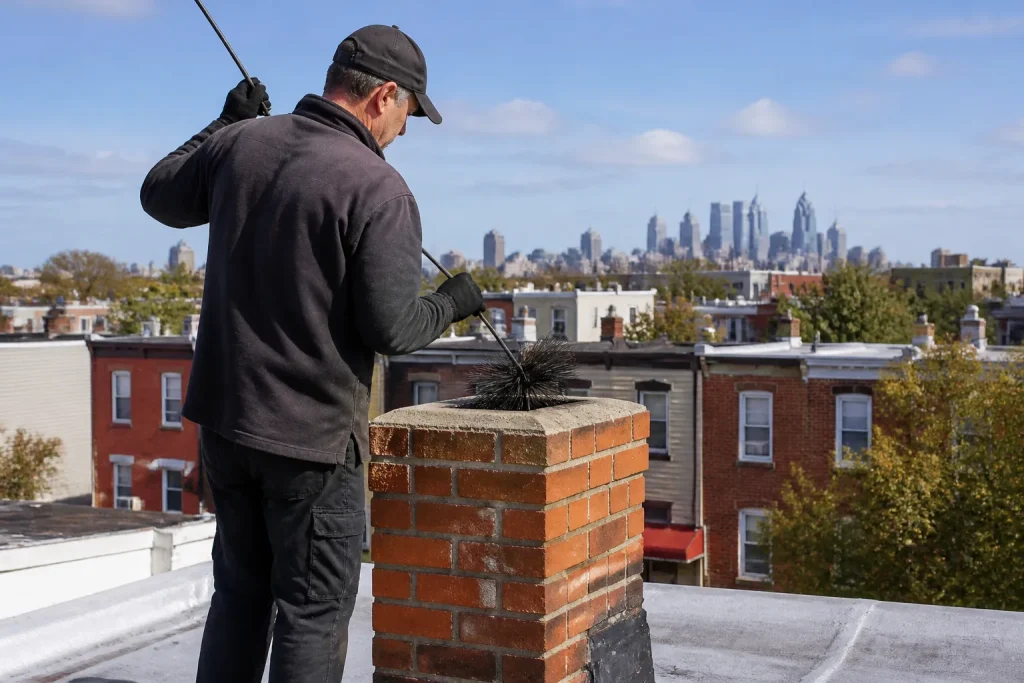
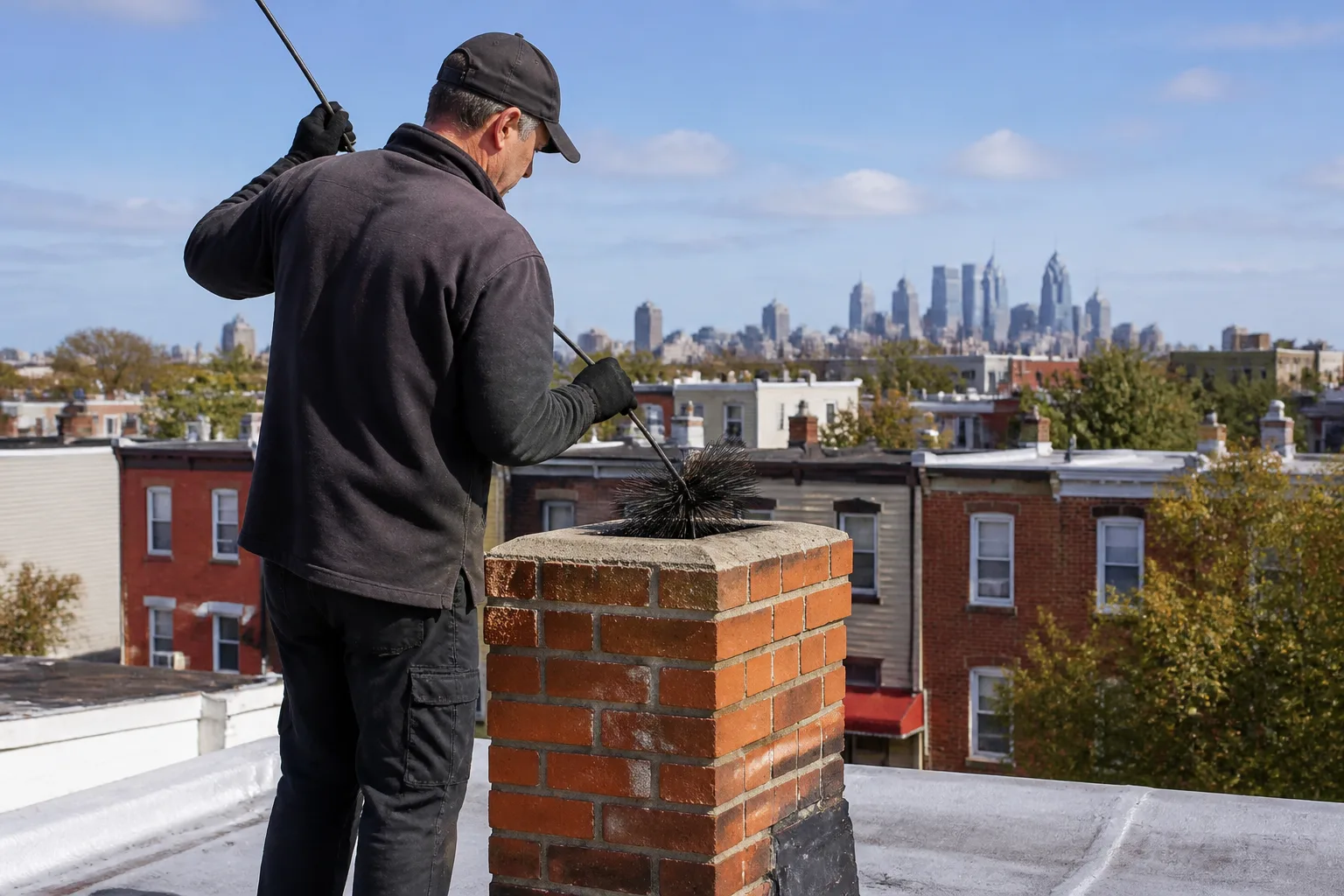
Chimney Sweep: Repair or Replace? How Northeast Philadelphia Homeowners Decide
A chimney that “needs to be replaced” almost never means the whole chimney. It usually means one specific component has failed – a cracked crown, a spalling brick course, a clay tile liner that’s flaking apart – and knowing which component, and why, is what determines whether repair or replacement is the right call. The trouble is that the answer you get often depends on who you ask. A sweep-only company may patch what they can reach. A rebuild-focused contractor may recommend tearing down what could have been saved. We wrote this so Northeast Philadelphia homeowners can tell the difference.
If you’d rather have someone walk you through your own chimney than sort through it alone, call (855) 658-4023. We answer 24/7.
Why “Repair or Replace” Is the Wrong Question at First
Homeowners in Northeast Philadelphia ask us some version of “do I need to replace my chimney?” almost every week, and the honest answer is that nobody can say until each part of the system has been looked at on its own. A chimney isn’t one thing. It’s a liner, a crown, a cap, a firebox, and the exterior masonry, and those five parts age at completely different rates and fail for completely different reasons.
What we’ve found in this part of the city is that a chimney rarely fails all at once. A clay tile liner cracks from years of heat cycling while the exterior brick still holds fine. A crown develops a hairline crack and starts funneling water down the flue, and two winters later the liner is spalling even though it wasn’t the original problem. The decision that actually matters isn’t repair-versus-replace for the whole chimney. It’s which specific component has reached the end of its service life and which ones are still doing their job.
That’s why we work component by component. A technician who can’t tell you which part failed, and why, hasn’t given you a technical answer – they’ve given you a business one. A chimney repair plan should point to the exact defect and show you the evidence before it recommends anything.
The Component-by-Component Decision Framework
Here’s the logic we use, part by part. This is the framework that keeps the decision grounded in condition instead of sales pressure.
Chimney Liner
The liner is the most safety-critical piece and the one with the most repair options. Clay tile liners can often be resurfaced rather than fully replaced. We use HeatShield for exactly this: it’s a resurfacing system applied inside the flue to rebuild a deteriorated clay tile liner back to a smooth, sealed condition, and it’s a product-specific process that sweep-only companies typically can’t offer. When the liner damage is more severe, or the flue has the wrong shape or size, a flexible stainless retrofit – like DuraFlex – lets us reline an older Northeast Philadelphia flue without demolishing the chimney to get at it.
Chimney Crown
The crown is the concrete cap on top that sheds water away from the flue. Hairline cracks are often repairable. A crown that’s crumbling or separating from the brick usually needs to be rebuilt, because water getting past it is what destroys everything below.
Chimney Cap
The cap (the metal or mesh cover) is the cheapest component to replace and does outsized work – it keeps rain, birds, and debris out of the flue. This is almost always a replace, not a repair, and it’s rarely a hard call. Our chimney cap & crown work covers both together since they’re doing the same job from two directions.
Firebox
The firebox takes the most direct heat and is prone to cracked firebrick and deteriorated mortar joints. Firebrick can often be replaced and joints repointed while the surrounding masonry stays. A firebox with structural cracking in the surrounding brick is a different story.
Exterior Masonry
This is where Northeast Philadelphia’s housing stock really shows its age. Spalling brick – the faces flaking off – is common on older chimneys, and the repair-replace threshold depends on how deep it goes. If only the surface is weathering, parging or repointing can protect it. If the brick is soft through the depth of the wythe, or a whole section is leaning, rebuilding that section is the sound call.
What Actually Changes the Math: A Level 2 Inspection
The single biggest factor in a repair-or-replace decision is whether anyone has actually looked inside the flue. A Level 2 inspection – a camera-based look at the full interior of the liner and flue – is what turns a guess into a plan, and it’s the standard requirement before any major chimney work, including relining. Without it, a recommendation to replace the liner is just an opinion.
Here’s what a Level 2 inspection reveals that changes the decision:
- Whether that crack in the clay tile is a surface flaw or a break that opens the flue to the house
- The condition of offset joints and the smoke chamber, which you can’t see from below
- Any gaps or separations between liner sections that only show up on camera
- The actual interior dimensions, which decide whether a flexible stainless reline will fit
We include camera inspection and a photo report as part of the work, because a homeowner shouldn’t have to take a contractor’s word for what’s inside their own chimney. You should be able to see the same pictures we’re making the recommendation from. When we tell you a HeatShield resurfacing will hold for years, you’ll understand why – and when we tell you work can safely wait another season, you’ll know that’s grounded in what the camera showed, not a guess. Our chimney sweep visit is the natural time to schedule that inspection.
Cost Comparison: Resurfacing vs. Reline vs. Full Rebuild in Northeast Philadelphia
Prices vary with flue length, access, and how much masonry is involved, so treat these as typical ranges, not quotes. A written estimate sets your final price.
| Approach | What it fixes | Typical Northeast Philadelphia range |
|---|---|---|
| HeatShield resurfacing | Deteriorated but structurally sound clay tile liner | $1,500 – $3,000 |
| Flexible stainless reline (DuraFlex) | Cracked or failed liner, wrong flue size | $3,000 – $6,000 |
| Masonry liner rebuild | Collapsed or badly damaged liner where masonry must be opened | $6,000 – $12,000+ |
| Crown rebuild | Crumbling or separated crown | $500 – $1,500 |
| Firebox repoint / firebrick replacement | Cracked firebrick and mortar joints | $600 – $2,000 |
The resurfacing-versus-reline question is often the one homeowners wrestle with. HeatShield is the less expensive and less invasive option when the existing clay tile is still holding together and only the surface has broken down. A full stainless reline is the right call when the tile is cracked through, missing, or the wrong size. Your flue decides which one is sound – not the price tag.
How Northeast Philadelphia’s Older Brick Housing Stock Affects the Decision
Much of Northeast Philadelphia is built with brick chimneys that are several generations old, and the age of the house matters to the repair-or-replace call. Older chimneys were often built with a single clay tile flue that was adequate for the fuel being burned when it was built – wood, or coal, before gas. Switching those homes to a modern appliance or a new wood insert puts different demands on a liner that was never designed for them, and that’s often where “it needs to be replaced” comes from.
Spalling and parging are where much of the decision gets made. Surface weathering – the brick faces flaking, some mortar joints washing out – is usually worth protecting with repointing and parging rather than rebuilding. It buys years. What tips toward rebuild is soft brick that crumbles to the touch through the full thickness, or a section that’s visibly leaning or separating from the main structure. In our experience, a lot of Northeast Philadelphia chimneys get called “beyond repair” that are really just weathered at the surface, and a lot get called “fine” that have soft brick well below the face. The camera and a careful look at the brick itself tell you which.
This is also why a full-system specialist matters here. A general handyman may repoint the outside without ever checking the liner behind it, and a sweep may clean the flue without noticing the crown above it is feeding water into the masonry. A chimney system handles heat, gas, and debris from the firebox to the crown – it deserves someone who can see the whole of it, not just the part they specialize in.
When It’s Time to Call a Pro
Some of this you shouldn’t sort out yourself. A cracked or separated liner can let combustion gases, including carbon monoxide, into the home, and a chimney with broken clay tile or a failed crown is a real fire and health hazard if it’s been burning unchecked. We don’t say that to push a job – we say it because we’ve seen what a failed liner looks like from the inside. If you’ve noticed cracking in the firebox, a strong smell, or smoke that doesn’t draft the way it should, get it inspected before your next fire.
What you shouldn’t do is guess at the condition of your own flue from the ground. Whether the answer is a HeatShield resurfacing, a flexible reline, or nothing at all, it should rest on what a camera shows. Our technicians have up to 13 years of experience, and we stock and work with professional-tier brands including HeatShield, DuraFlex, Gelco, Olympia Chimney, Famco, and Copperfield – not because a brand name sells the job, but because a liner is only as good as the material behind it, and the right one depends on what your flue actually needs. If you want the picture before the call, we’ll show it to you.
Related Services in Northeast Philadelphia
Full-system chimney service means we handle the whole of it – chimney sweep, chimney cap & crown, chimney repair, and liner and rebuild work – so you don’t have to string together three contractors. Start with a Chimney Sweep Northeast Philadelphia visit and we’ll go from the firebox to the crown.
What happens when you call
- 1
A real person answersNo phone trees – you reach a local pro.
- 2
You get an upfront price rangeHonest numbers before anyone is dispatched.
- 3
A background-checked tech heads outLicensed & insured, dispatched right away.
- 4
You approve before work beginsNothing starts until you say go.
The Bottom Line
The repair-or-replace decision on a chimney in Northeast Philadelphia almost always comes down to one component, not the whole system. A failed liner, a crumbling crown, a cracked firebox, or soft exterior brick each has its own repair-or-rebuild threshold – and the right answer is the one grounded in a Level 2 inspection you can see for yourself, not a sales pitch. When the liner can be resurfaced with HeatShield, that’s usually the sensible first move. When the clay tile is too far gone, a flexible stainless reline like DuraFlex gets you a sound flue without tearing the chimney apart. If you’re in Northeast Philadelphia and need help deciding, Chimney Sweep Northeast Philadelphia offers free estimates – call (855) 658-4023. We answer 24/7. Fast dispatch from 7am to 7pm.
Frequently Asked Questions
No. The exterior tells you about the crown and the masonry, but it can’t tell you the condition of the liner or the firebox. A chimney can look sound from the ground and have a badly cracked liner that only shows up on a camera inspection. That’s why a Level 2 inspection comes before any major decision. Call (855) 658-4023 for a free estimate – estimates are free.
HeatShield resurfacing is the right call when your clay tile liner is deteriorated but still structurally sound – the surface has broken down, the tile hasn’t failed through. A full stainless reline (like DuraFlex) is right when the tile is cracked all the way through, missing, collapsed, or the wrong size for your flue. Your flue decides, not the budget. Call (855) 658-4023 for an exact quote – estimates are free.
Probably not. Most aging brick chimneys in this part of the city need repointing, parging, or a crown repair rather than a full rebuild – the decision turns on whether the brick is only weathering at the surface or is soft all the way through. A careful look at the brick itself, not just the top course, is what answers it. Call (855) 658-4023 to find out where yours stands – estimates are free.
A cracked crown or a missing cap lets water into the masonry, and water is what destroys a chimney from the inside out. A failed liner lets combustion gases, including carbon monoxide, into the home, and a chimney fire risk grows with creosote buildup it can’t keep out. We don’t say that to scare you into work – we say it because these are the two things that make an inexpensive repair into an expensive one. Call (855) 658-4023 – estimates are free, and we’ll tell you plainly when work can safely wait.
Written by the team at Chimney Sweep Northeast Philadelphia.
Need Chimney Cleaning Help?
Call Chimney Sweep Northeast Philadelphia - the local pro we connect you with is licensed and insured, with free written estimates in Northeast Philadelphia.
(855) 658-4023