
Last updated November 22, 2026
 Sweep & inspection
 Caps & crowns
 Flue relining
 Masonry repair
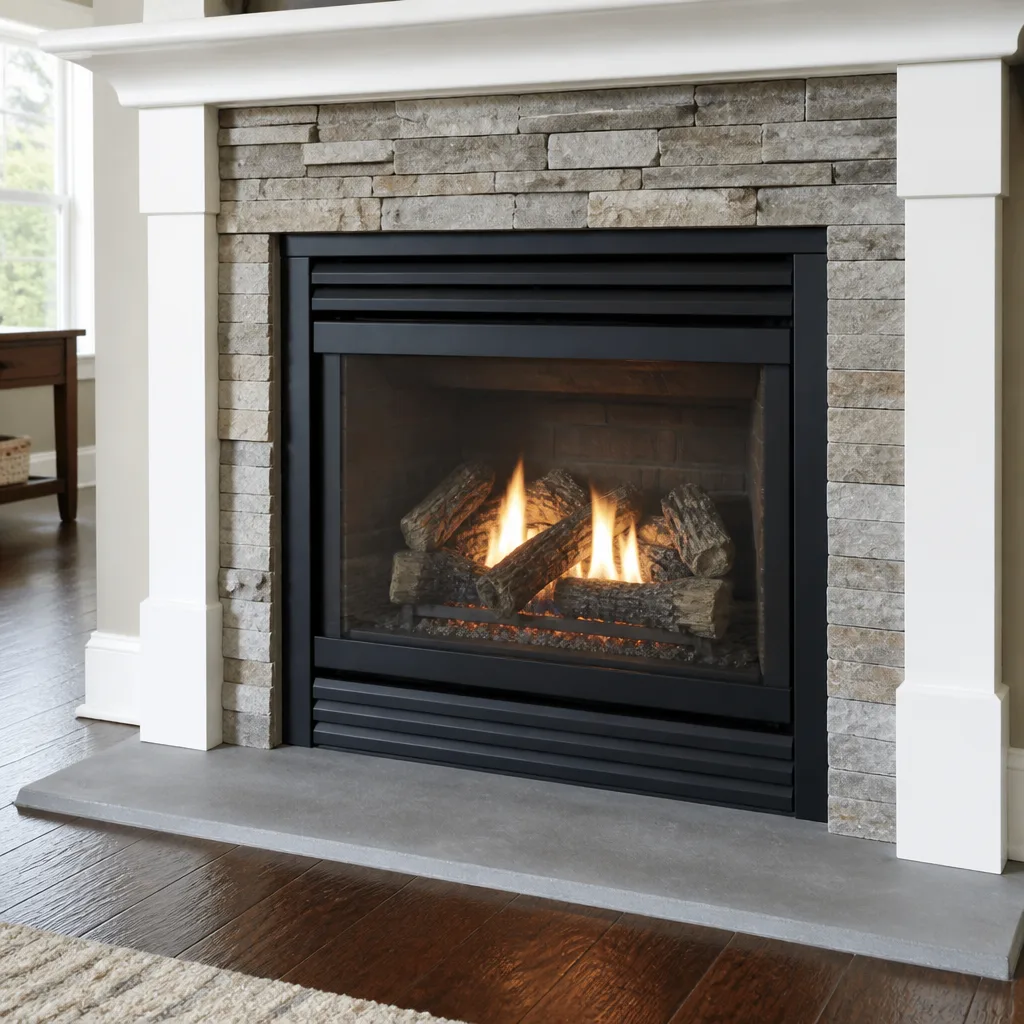 Gas fireplace service
Level 1 sweep and inspection to the NFPA 211 annual standard - flue, crown, cap, and flashing checked and photographed
Chimney sweep logs do not sweep chimneys. They loosen some creosote - which then falls where a brush and vacuum still have to collect it.
Chimney Sweep Troubleshooting in Northeast Philadelphia: Common Problems and How to Fix Them
If your chimney smokes into the room after a sweep has already been through, the sweep cleaned what was there but nobody diagnosed why the problem is happening. That’s the gap most homeowners in Northeast Philadelphia run into. Cleaning removes what built up inside the flue; it doesn’t tell you why smoke rolls back into the living room, why the fireplace smells in July, or why the draw gets weak on certain days. This guide maps each of those symptoms to the mechanical cause behind it, using the same diagnostic logic we work through on a service call, from the firebox to the crown.
Quick Answer
Most chimney problems trace to one of four things: a flue that’s blocked or the wrong size, a liner that’s cracked or deteriorated, a cap or crown that’s damaged or missing, or a firebox and smoke chamber that were poorly designed to begin with. Backdraft, downdraft, and negative pressure feel similar but each has a different cause and a different fix. Getting the diagnosis right before anything gets cleaned or replaced is the difference between solving the problem and paying for the wrong service.
Styles & brands we work with
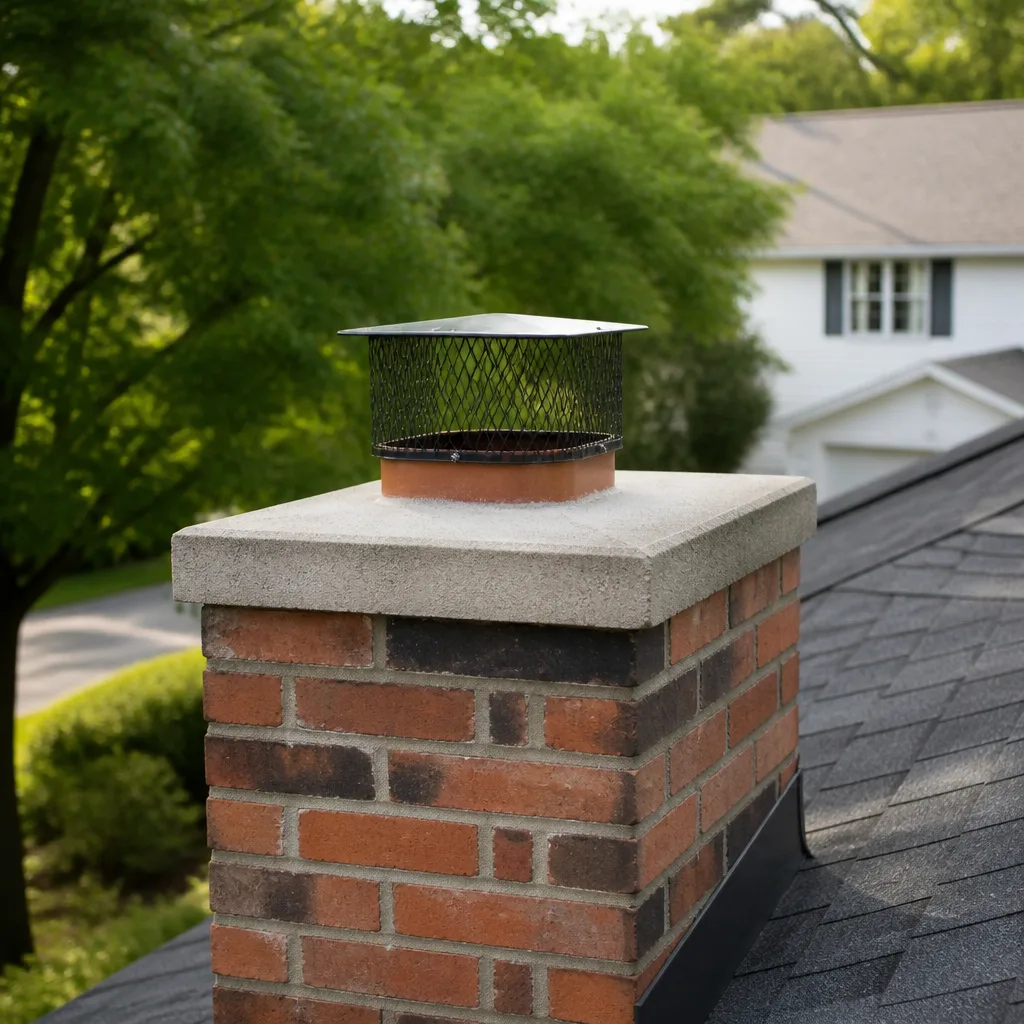
- Sweep & inspection
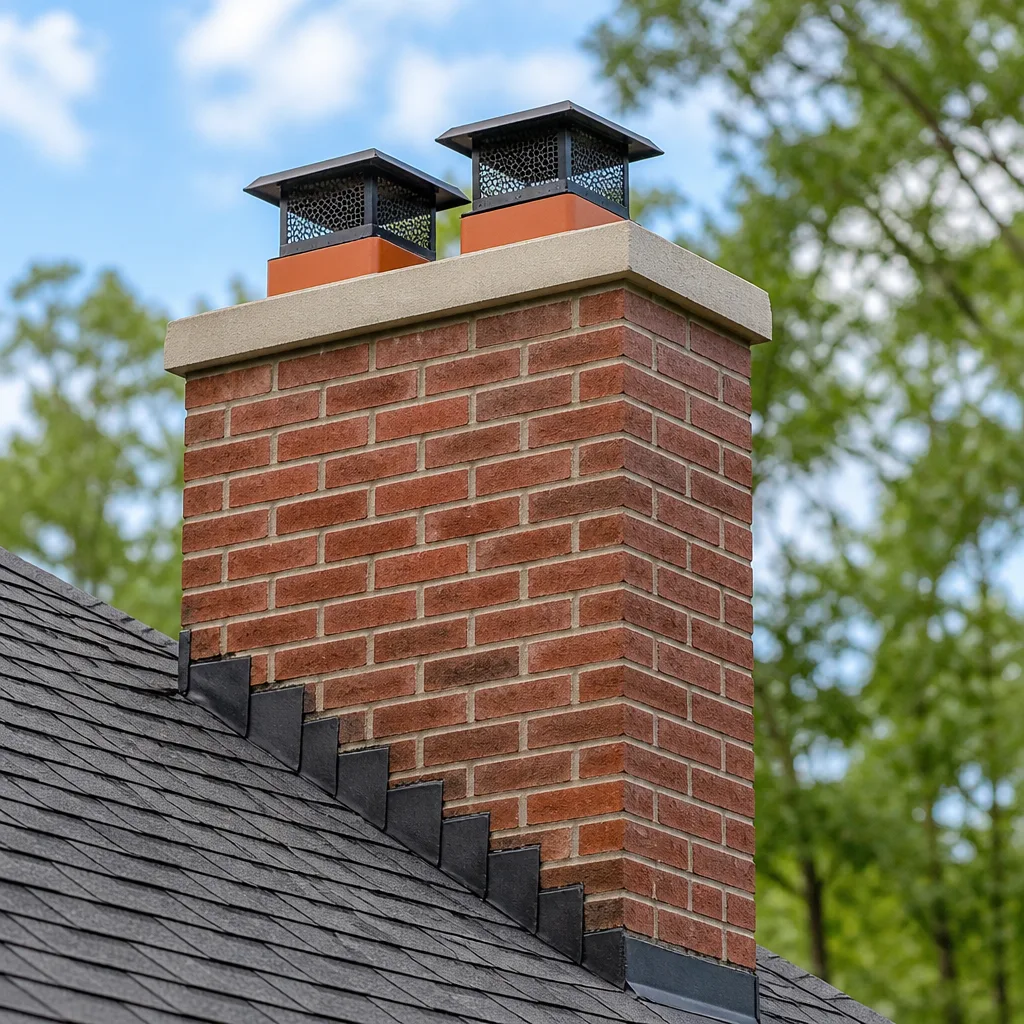
- Caps & crowns
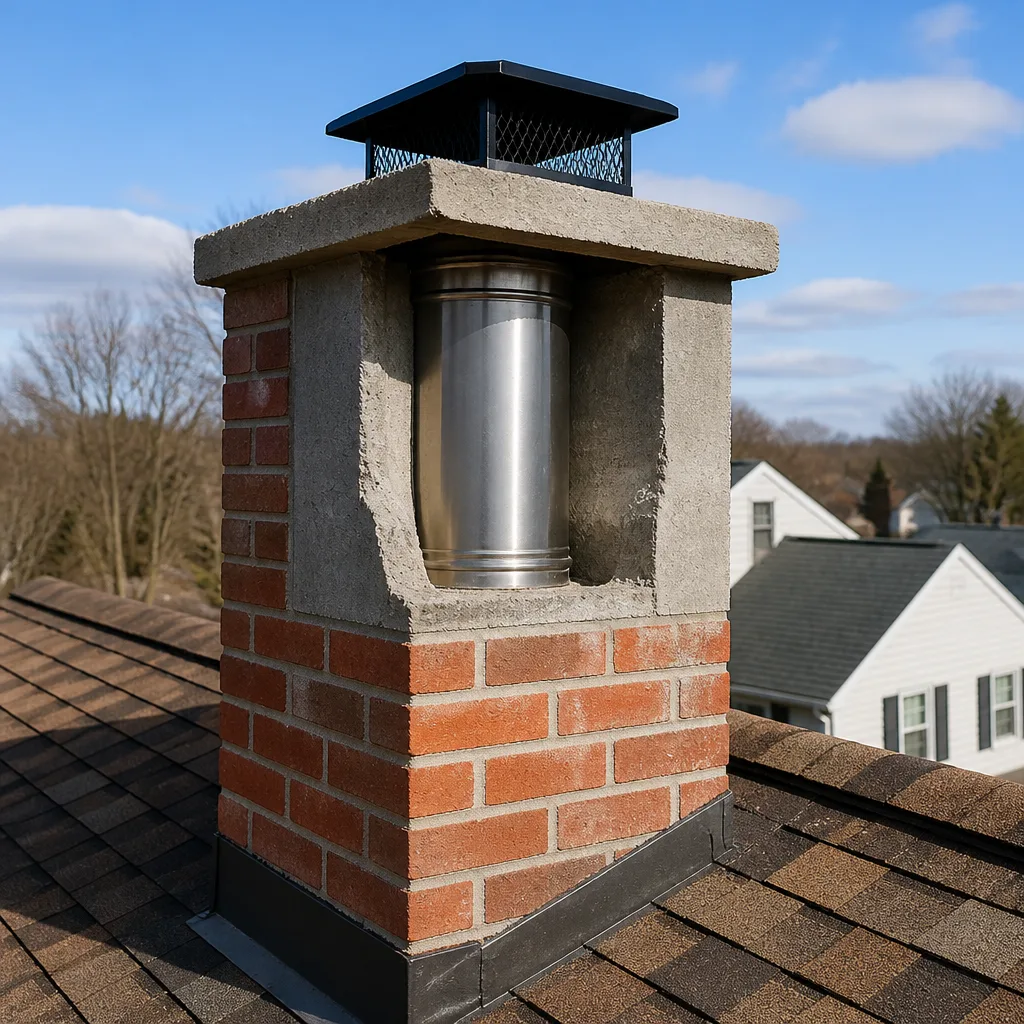
- Flue relining
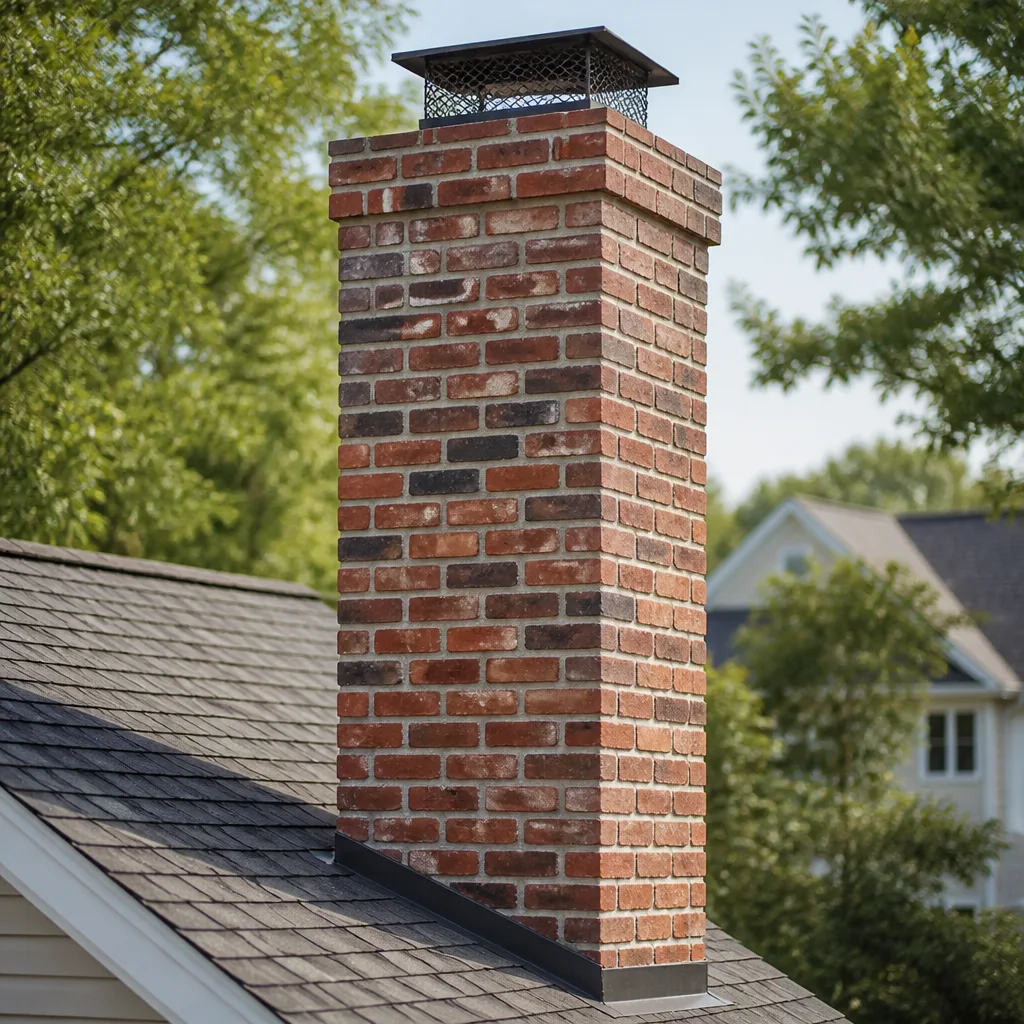
- Masonry repair
- Gas fireplace service
Table of Contents
- Symptom to Cause: A Troubleshooting Map
- Backdraft, Downdraft, and Negative Pressure Explained
- Is It the Flue, the Liner, the Cap, or the Firebox?
- Why It Smokes When It’s Windy
- Creosote Odor in Summer vs. Winter
- Cleaning, Liner Repair, or Rebuild?
- What Northeast Philadelphia Homes Specifically Deal With
- Common Mistakes to Avoid
- When to Call a Professional
Symptom to Cause: A Troubleshooting Map
The fastest way into a chimney problem is to start with the symptom and work backward. Symptoms cluster, and each cluster points to a specific part of the system. Here’s how we sort them on a first visit.
- Smoke rolls into the room when you light a fire: usually pressure-related, a blocked or undersized flue, or a firebox that’s too shallow for the opening. Rarely just dirt.
- Smoke appears only on windy days: almost always a cap problem or a flue that’s too short for the roofline. Cleaning won’t fix it.
- Fire burns sluggish, wood won’t catch: restricted draft. Could be blockage, a partially collapsed liner, or a closed or undersized damper.
- Musty, smoky, or creosote smell with no fire burning: liner or flue deposit condition, especially in humid summer months.
- Water stains on the chimney breast or ceiling: crown, cap, or flashing failure letting water in.
- White or brown staining on exterior brick: moisture migrating through the masonry, often tied to a failing crown or liner.
- Crumbling mortar joints or loose bricks: structural moisture damage that’s moved beyond the flue into the chimney body.
What makes this map useful is that it keeps you from paying for a cleaning that won’t solve anything. A dirty flue and a drafting problem produce the same visible symptom (smoke), but only one of them is fixed by a brush. On a service call in Northeast Philadelphia, the diagnostic step comes first and the cleaning comes second. If the symptom list points to pressure or design, the flue gets inspected before it gets swept.
The one thing every one of these symptoms shares: they all involve the same physical system, from the firebox floor up through the smoke chamber, the flue, the cap, and the crown. Treating one component in isolation is how problems get missed.
Backdraft, Downdraft, and Negative Pressure Explained
These three terms get used interchangeably by homeowners and even by some sweep-only services, and they are not the same thing. Backdraft is smoke that reverses direction because the chimney is fighting an opposing pressure source in the house. Downdraft is air moving down the flue because the flue is cold or the cap is agitating the flow. Negative pressure is a house-level imbalance where the chimney can’t pull air because too much air is being exhausted elsewhere. Each has a distinct fix.
Backdraft
Backdraft happens when the chimney is trying to exhaust into a house that’s pulling harder in the other direction. A kitchen exhaust fan, a bathroom fan, a dryer, a furnace flue, or a second fireplace all compete for the same air. When the negative pressure inside the house beats the draft inside the chimney, the smoke comes back down. The fix usually runs to one of three places: adding combustion air to the room, correcting a flue that’s too large for the appliance, or shortening an exterior chimney that’s too tall to warm efficiently.
Downdraft
Downdraft is the flue itself failing to establish an upward flow. A cold chimney, a flue that’s the wrong size for the firebox, or a cap that’s letting wind curl down the flue can all produce it. This one often shows up on the first fire of the season, then clears once the flue warms up. If it happens every time, it’s not just cold-start behavior; it’s a drafting problem.
Negative Pressure
Negative pressure is the house-wide version of backdraft. Tight modern construction, added weatherstripping, and exhaust appliances all lower indoor pressure. Older Northeast Philadelphia row houses and twins were built before any of that, so the house envelope was never designed to accommodate it. When the pressure difference gets big enough, the chimney can’t pull, and no amount of cleaning changes that. The fix is pressure correction, either through a dedicated combustion air supply or by addressing the appliance configuration.
If a sweep has already been through and the smoke didn’t stop, the diagnosis probably never left the “dirty flue” assumption. Backdraft, downdraft, and negative pressure all produce smoke in the room; the treatment is different for each.
Is It the Flue, the Liner, the Cap, or the Firebox?
Four components cause most of the visible problems homeowners report. Knowing which one is failing narrows the fix before anyone shows up. Here’s how to tell.
- The flue. Look for a blocked, undersized, or oversized flue. Blockages are usually nests, debris, or a failed liner that’s collapsed inward. Sizing issues are design problems and won’t respond to cleaning. A flue that’s too large for the firebox loses heat and drafts poorly; a flue that’s too small restricts flow.
- The liner. A clay tile liner that’s cracked, spalled, or missing mortar joints lets heat and gases into the surrounding masonry. That’s a fire pathway and a carbon monoxide pathway. Stainless retrofits such as DuraFlex are the standard answer in older homes where the original tile can’t be repaired from the inside. For liners that are still structurally sound but have a rough interior surface, resurfacing with HeatShield restores a smooth, sealed flue without demolition.
- The cap and crown. The cap keeps water, animals, and debris out of the flue and helps stabilize draft. A cracked crown lets water into the chimney body, which is where most structural damage starts. We handle chimney cap & crown work as part of the full-system approach because a sound cap and crown protects everything underneath.
- The firebox design. Some fireboxes are simply too shallow, too tall, or improperly proportioned to their flue. A smoky fireplace with a perfectly clean flue and an intact liner is often a design problem, and the fix is a smoke chamber or firebox correction, not a sweep.
On a service call, we work this list in order, because the cheaper and more reversible fixes come first. If the flue and liner are fine and the cap is intact, the problem sits in the firebox or the house pressure, and we say so plainly instead of proposing liner work that won’t solve it.
Why It Smokes When It’s Windy
“It smokes when it’s windy” almost always means a cap or height issue, not a dirty flue. Wind creates turbulence at the chimney top, and a chimney that drafts fine on a calm day can reverse under the wrong gust pattern. Cleaning a flue that’s already clean doesn’t change how the chimney behaves in wind. That’s why so many homeowners get a sweep and still have the problem the next windy day.
A few specific failure modes account for most windy-day smoking:
- No cap or a damaged cap. Without a properly designed cap, wind can curl over the flue opening and push air down. A cap that’s cracked, rusted through, or too small for the flue does the same thing.
- Chimney too short for the roofline. A chimney that terminates close to the roof pitch, or near a taller adjacent structure, sits in a pressure zone where wind will always curl over the top. Height corrections are the fix.
- Wrong cap style for the exposure. A flat cap that works fine in a sheltered area may not handle turbulent wind on an exposed roofline. The right cap for the situation is part of the diagnosis.
- Adjacent structure or tree interference. Northeast Philadelphia has plenty of both. A tall tree that’s grown over the years can put the chimney in a downdraft pattern that didn’t exist when the house was built. Trimming or height adjustment is the answer.
If your fireplace only smokes when it’s windy, ask for a cap and height inspection before you book a sweep. Cap work is one of the five service categories we handle, and it’s often the actual answer for a windy-day smoker.
Creosote Odor in Summer vs. Winter
A chimney that smells in summer and a chimney that smells in winter are telling you two different things. Summer odor, especially in a humid stretch, is usually the smell of creosote and soot deposits reacting to moisture in the air. Winter odor, especially when the fireplace isn’t running, often points to a liner that’s letting gases seep into the masonry or the house. Both matter, but the fix isn’t the same.
Summer odor
Creosote is hygroscopic, meaning it pulls moisture out of the air. In a humid Northeast Philadelphia July, a flue with heavy deposits will smell musty or smoky even with no fire burning. That smell isn’t dangerous on its own, but heavy creosote deposits are the fuel for chimney fires, so a summer odor is a real signal to get the flue inspected and cleaned. A properly swept chimney with an intact liner and a good cap tends to stay odor-free through the summer.
Winter odor
Winter odor is more concerning. If the fireplace isn’t running and you still smell smoke or combustion gas, the liner or the flue is likely letting gases migrate out of the intended pathway. A cracked clay tile, an unsealed liner joint, or a flue that’s deteriorated enough to have gaps will do it. This is where liner inspection matters most. In our experience, the winter-odor call that turns out to need a DuraFlex stainless retrofit is more common than the one that just needs another sweep.
Neither odor calls for panic. Both call for a proper look at the liner before assuming the problem is cosmetic.
Cleaning, Liner Repair, or Rebuild?
The right service tier depends on what’s actually failing. Most homeowners assume everything requires a rebuild; in reality, most problems resolve one or two tiers down. Here’s the hierarchy we work through.
- Cleaning only. The flue and liner are structurally sound, the cap and crown are intact, and the deposits are heavy enough to warrant a sweep. This is the routine chimney sweep case, and it’s the most common outcome when the diagnostic step comes first.
- Liner repair without replacement. A clay tile liner with rough interior surfaces, moderate spalling, or isolated joint issues can often be restored with HeatShield resurfacing. That product is a proprietary cast-in-place system requiring specific product training, which is why most sweep-only services can’t offer it and refer the work out. The result is a smooth, sealed flue without demolition.
- Liner replacement. A liner with significant cracking, missing tiles, or gaps that can’t be resurfaced gets replaced. A stainless flexible liner, such as those from DuraFlex or Olympia Chimney, retrofits into existing flues without tearing the chimney apart. In older Northeast Philadelphia housing stock, this is often the right answer for a badly deteriorated clay tile liner.
- Chimney repair. Cracks in the chimney body, crumbling mortar, or a failing crown moves the job into chimney repair territory. The repair scope is limited to the chimney itself, which is where our work stays.
- Rebuild. When the structural integrity of the chimney body is compromised above the roofline, rebuilding the affected section is the real fix. This is the least common tier, and it’s the one most often proposed prematurely by contractors who don’t inspect first.
We work with professional-grade chimney industry brands, including Gelco and Famco products, so the material chosen for each tier actually fits the failure mode. Product knowledge is what keeps a resurfacing case from being sold as a rebuild.
What Northeast Philadelphia Homes Specifically Deal With
Northeast Philadelphia has a housing stock that shapes the diagnostic work. The neighborhoods here run heavy on mid-century and earlier row houses and twins, many with original clay tile liners that are now past their reasonable service life. Those liners are usually sized for the original appliance, not the current one, so resizing comes up more often than in newer construction. The humid summers and freeze-thaw winters put steady stress on mortar and crowns, which is why crown failure and exterior masonry staining show up regularly in homes from Mayfair through Torresdale and down through Bustleton.
A few patterns we see in Northeast Philadelphia specifically:
- Original clay liners reaching end of life. A tile liner that was fine in 1955 isn’t necessarily fine now. Cracks and spalling accumulate slowly, and the first symptom is often a winter odor or a smoky fire rather than anything visible from outside.
- Row house pressure issues. Adjacent units share walls and stack effects, so backdraft and negative pressure behave differently here than in detached homes. A fireplace that smokes in one unit and drafts fine next door is common.
- Cap and crown weathering. The local freeze-thaw cycle is hard on crowns and mortar joints. A crown that fails over a winter lets water into the chimney body, and that’s where longer-term masonry damage starts.
- Firebox design from an earlier era. Some fireplaces in this housing stock were designed for coal or for a shallower fire than today’s homeowner wants to burn. That mismatch shows up as a smoky fire even when everything else is clean and intact.
The point isn’t that Northeast Philadelphia is unusual; it’s that the same symptoms point to different fixes depending on the local housing. A resurfacing case here is often cheaper and safer than a full rebuild, and the right diagnosis is what protects the homeowner from a wrong-tier quote.
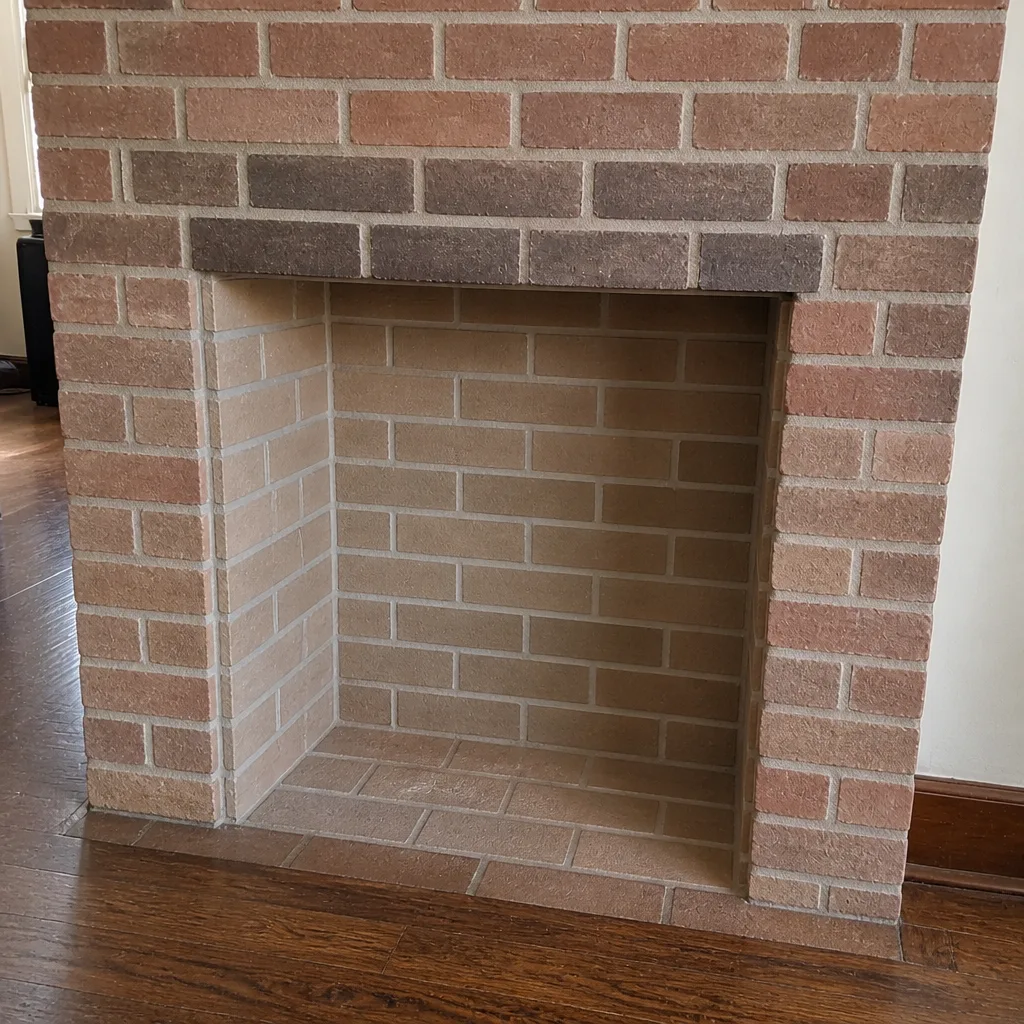
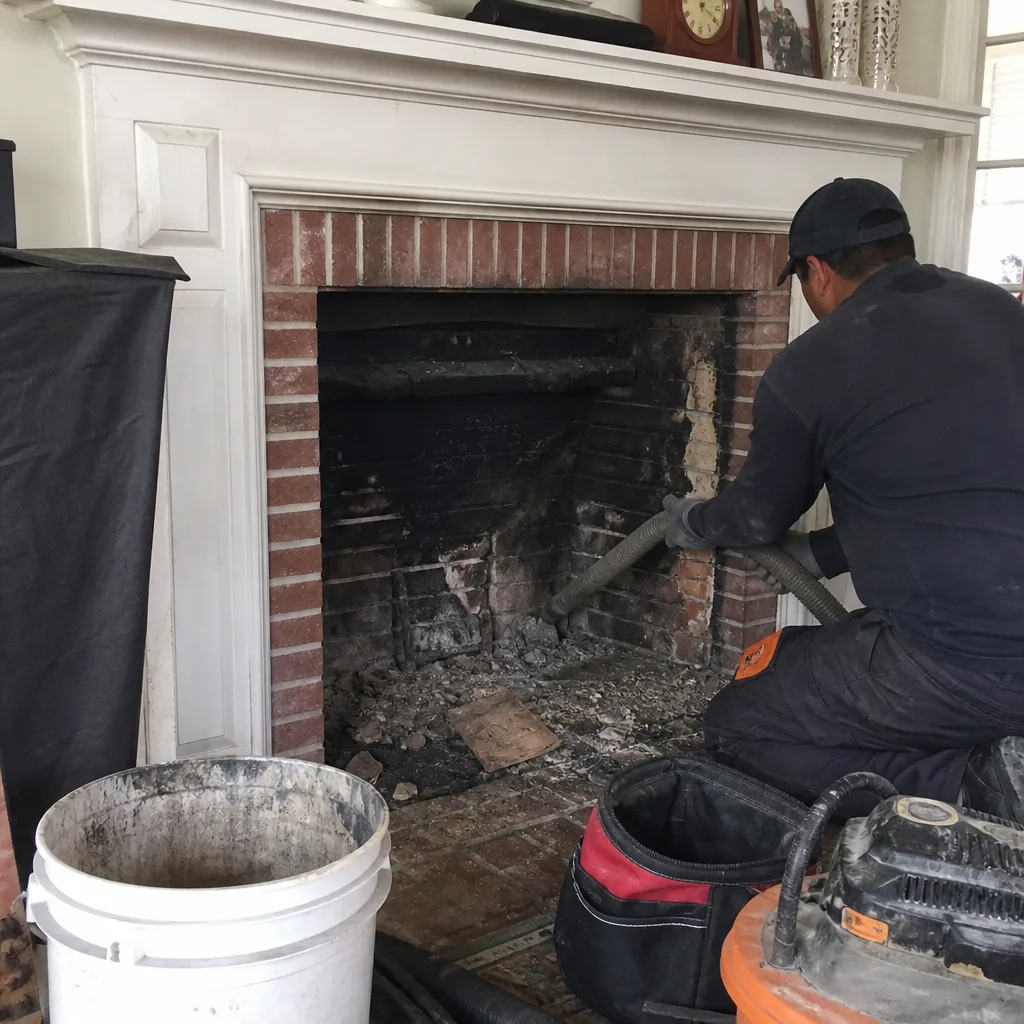
See the difference
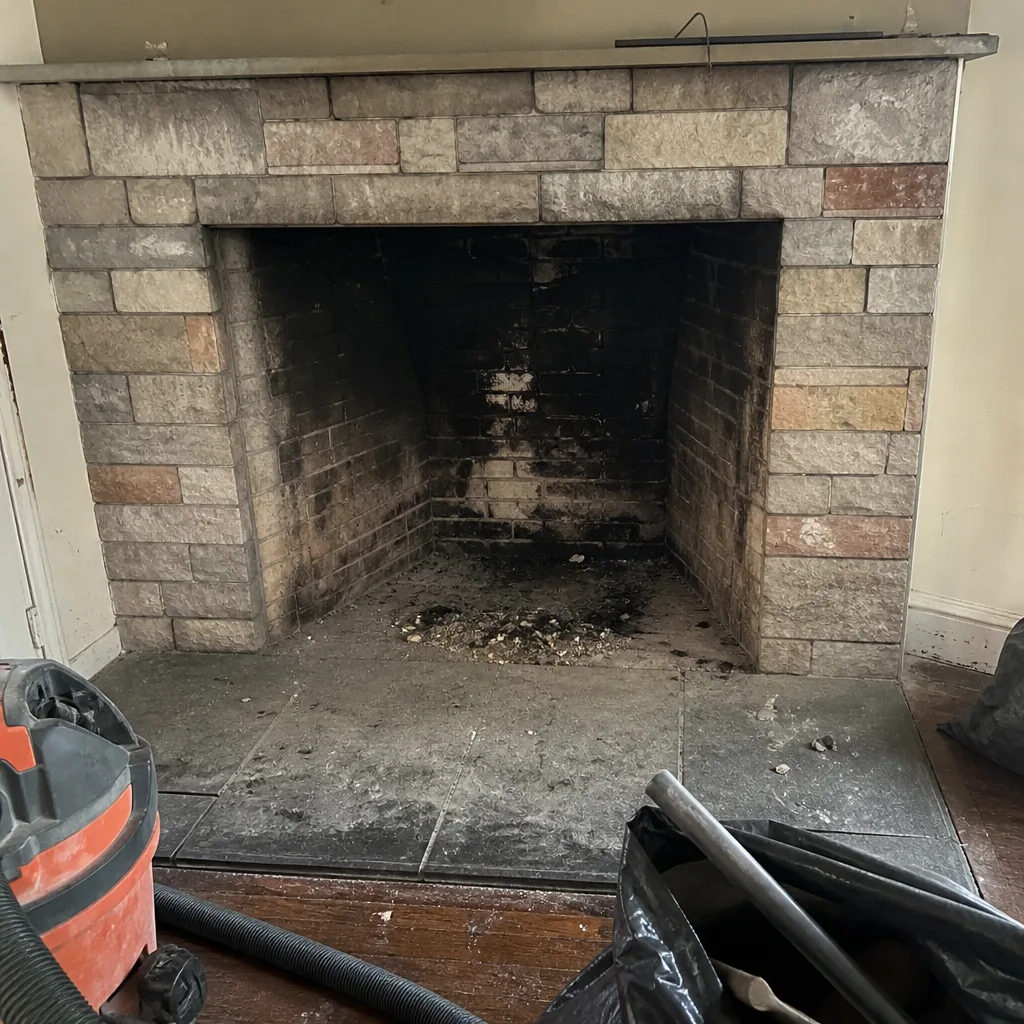 Before
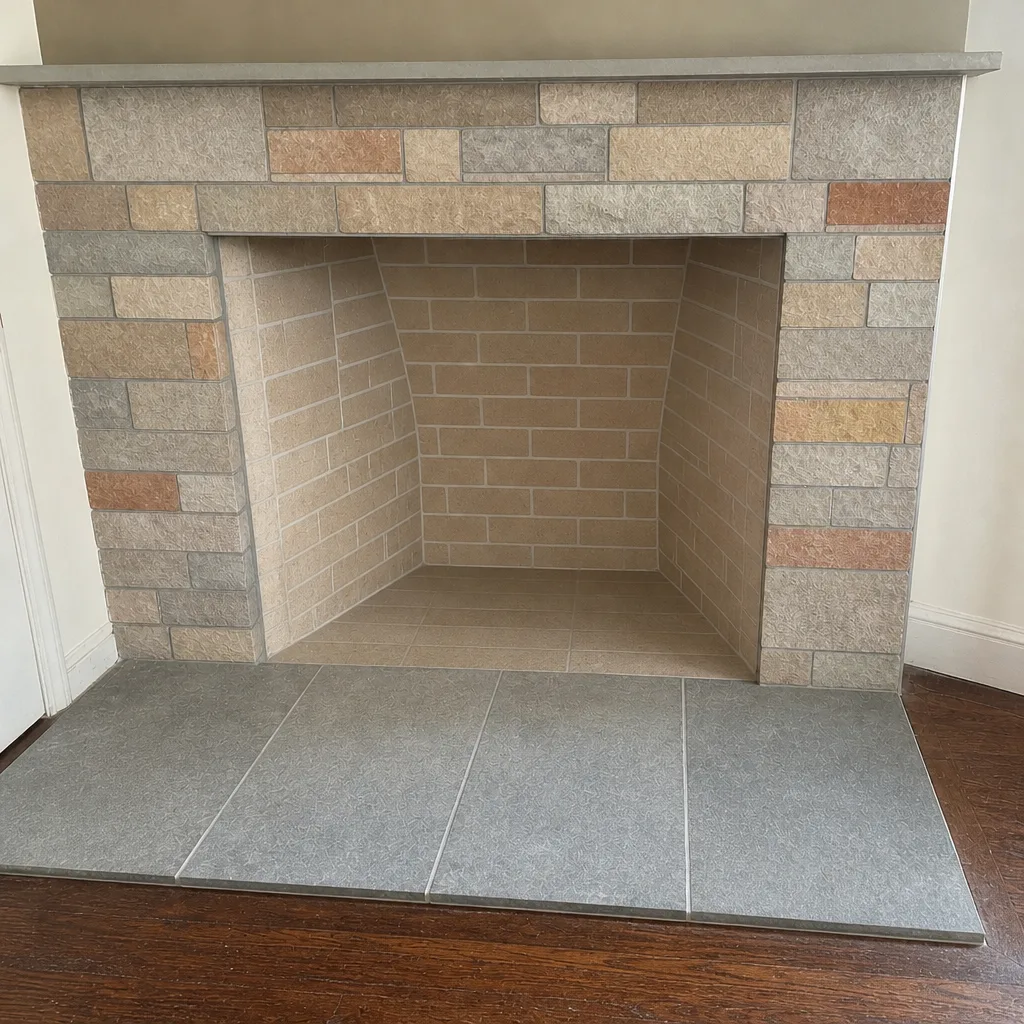 After
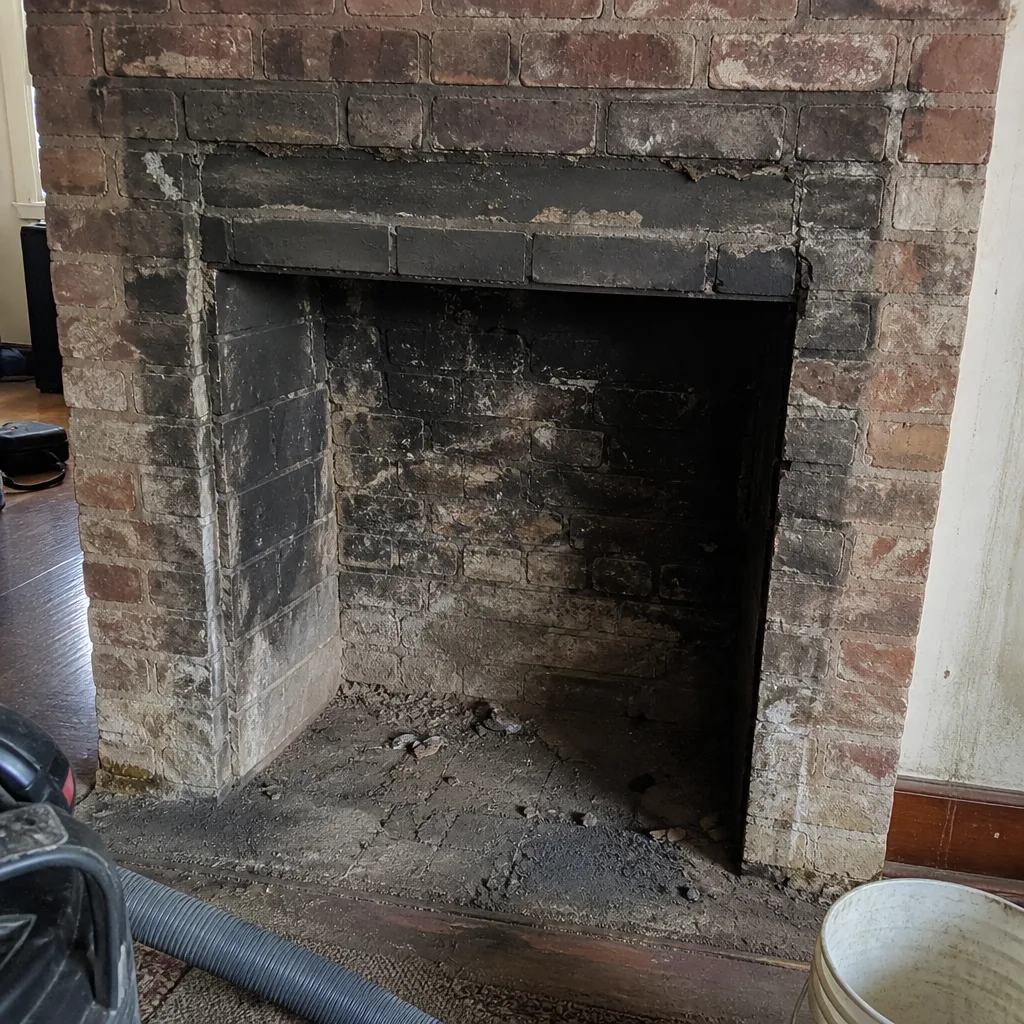 Before
 After
 Before
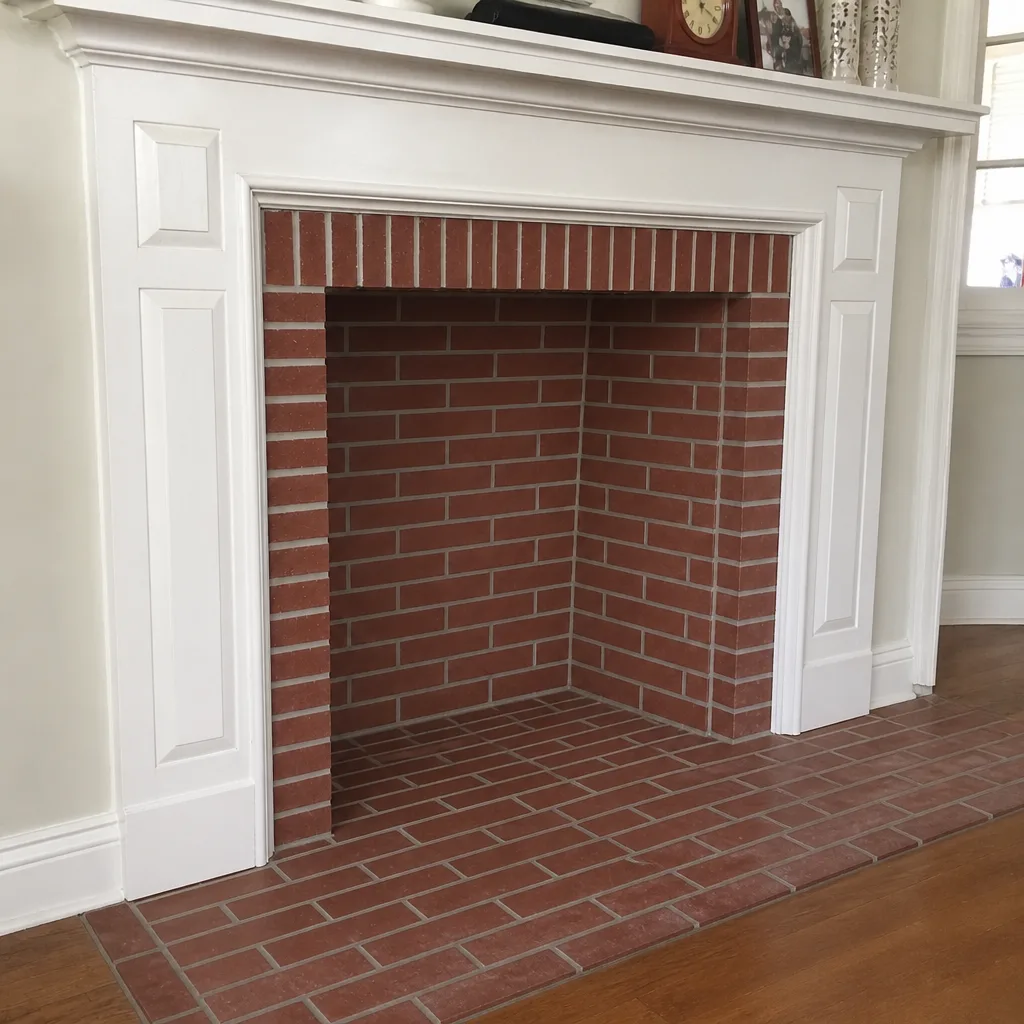 After
Common Mistakes to Avoid
- Assuming a sweep will fix a smoking fireplace. A sweep removes what’s built up inside the flue. It doesn’t change pressure, flue sizing, cap design, or firebox proportion. If smoke continues after a sweep, the diagnosis step was skipped.
- Booking a cleaning for a windy-day problem. A fireplace that only smokes in wind almost always has a cap or height issue. Cleaning won’t change how the chimney behaves on a gusty day.
- Treating a summer creosote smell as harmless. The smell itself isn’t dangerous, but heavy deposits are the fuel for chimney fires. A summer odor is a signal to get the flue inspected and cleaned before the heating season starts.
- Ignoring water stains on the chimney breast. Water coming in through the crown or cap eventually reaches the masonry and the liner. Left alone, it becomes structural damage. Annual inspections catch it early.
- Letting a sweep-only service refer out the liner work. When a liner or crown failure is the actual problem, a sweep-only operation passes you to a second contractor and the diagnosis gets lost between them. A full-system chimney specialist handles the sweep, the liner, the cap, and the rebuild as one scope.
- Skipping a proper inspection before a rebuild is proposed. Not every liner problem requires a rebuild. Resurfacing with HeatShield, or a stainless retrofit with DuraFlex, resolves many cases that a rebuild quote mislabels. Get the failure mode identified first.
- Assuming the neighbor’s chimney problem is your problem. Row house drafting issues behave independently per unit. A problem in one home doesn’t mean the adjacent home has the same failure, even if the symptoms sound the same.
When to Call a Professional
Some issues genuinely need a professional on site. If you smell smoke or combustion gas in the house with no fire burning, that’s a call today, not a call next month. Any water intrusion around the chimney, staining on the chimney breast, or visible masonry cracking is worth a proper inspection before the next heating season. A fireplace that smokes every time you light it, or only on windy days, won’t fix itself by waiting. Any existing chimney fire, even one that appeared to go out, needs an inspection before the next fire.
Our technicians have up to 13 years of experience diagnosing and repairing these exact failure modes, and we handle the full system from the firebox to the crown. Chimney Sweep Northeast Philadelphia offers free estimates in Northeast Philadelphia. Call (855) 658-4023. We answer 24/7. Fast dispatch from 7am to 7pm, Sunday through Friday.
Frequently Asked Questions
The sweeps cleaned the flue but didn’t diagnose what’s causing the smoke. A smoking fireplace after sweeping almost always points to a pressure issue, a flue sizing problem, a failing cap, or a firebox design flaw rather than a dirty flue. The next step is a diagnostic inspection that works through backdraft, downdraft, liner condition, cap, and firebox in that order. Call (855) 658-4023 for an exact quote; estimates are free.
Backdraft is smoke reversing direction because the house is pulling harder than the chimney, usually from exhaust fans, furnaces, or a tight building envelope. Downdraft is the flue itself failing to establish upward flow, often due to a cold flue or an agitating cap. Backdraft is a house-pressure problem; downdraft is a flue-flow problem, and the fix for each is different.
No. A fireplace that smokes only when it’s windy almost always has a cap problem or a chimney height issue, and cleaning won’t change wind behavior. Ask for a cap and height inspection first. That’s the diagnostic step that actually matches the symptom.
Not dangerous on its own, but it’s a signal. Creosote pulls moisture out of the air, so heavy deposits smell strongest in humid weather. That heavier deposit is also the fuel for chimney fires, so a summer odor is a good reason to book a sweep and liner inspection before the heating season starts. Call (855) 658-4023 for an exact quote; estimates are free.
Often yes. A tile liner with rough surfaces or moderate spalling can be resurfaced with HeatShield, which is a cast-in-place system that restores a smooth, sealed flue without demolition. More severe cases are handled with a stainless flexible retrofit such as DuraFlex or Olympia Chimney. A full rebuild is the last tier and the least common result when the failure mode is diagnosed properly.
No, we are closed Saturday. We’re open Sunday through Friday, 7am to 7pm, and fast dispatch runs during those hours. Call (855) 658-4023. We answer 24/7, and a call outside dispatch hours is booked into the next opening, Sunday through Friday, 7am to 7pm.
The Bottom Line
Most chimney problems are diagnosable, and most of the wrong services get sold because the symptom wasn’t mapped to its cause first. Backdraft, downdraft, and negative pressure all produce smoke in the room; only one of them is fixed by cleaning. Windy-day smoking points to a cap or height issue. Summer odor points to deposits; winter odor points to liner condition. And the fix tier matters: cleaning, resurfacing, liner replacement, repair, or rebuild, in that order, is the right sequence to work through.
If you’re in Northeast Philadelphia and your chimney is doing something you can’t explain, start with the diagnostic step. Our technicians have up to 13 years of experience with the full system, and we work the complete chimney and fireplace scope, from the firebox to the crown, using Chimney Sweep Northeast Philadelphia as the starting point for most homes. Call (855) 658-4023 for a free estimate. We answer 24/7. Fast dispatch from 7am to 7pm, Sunday through Friday.
Written by the team at Chimney Sweep Northeast Philadelphia.